CO impact: 0.042 kg/year
The Critical Discourses arm of the Journal of Socio-Cultural Narratives (JSCN) is committed to a Minimal Carbon Footprint.

Welcome to our freshly curated Sips N’ Tidbits. Enjoy your mornings by treating your curious selves. Come, lets dive into a wide array of topics, from Sexual Sciences, Neuroscience, Anthropology, Molecular Biology, Behavioral Sciences, Political Science, Linguistics, Dance Ethnography, Ethnomusicology, and Paleoclimateology.

Subscribe to our newsletter to receive sex news, educational content & research updates.
Long ago, before there was Humankind and their rules, there was Nature. Nature was the most imaginative of energies, for it would bring to life, species that even our brains could not fathom. In its world, every energy was Normal, each of them fluctuating with their own ebbs and flows. To constrict their tides was equivalent to declaring war against the powers of Nature.
Like its many creations, one such was the Homo sapiens. Having gone through a millennia of evolution, they stand today at the brink of their society’s collapse as they are loosing their war against Nature.
As be it, Nature designed every animal, such that they could choose to connect, form attachments, experience pleasure and procreate. There were no hard and steadfast rules in Nature: Mendelian genetics did not apply to all species, brains were forever evolving, no animal’s appearance remained the same, no animal displayed consistency in whom they were attracted to, throughout their existence. Every entity, every energy had its flow.
Nishita Rao is a transdisciplinary researcher focusing on how does culture and politics influence the evolution of human social and sexual attitudes, perceptions, behaviors and artistic expressions in post-colonial societies. She delves into Sexual Sciences, Neuroscience, Anthropology, Molecular Biology, Behavioral Sciences, Political Science, Linguistics, Dance Ethnography, Ethnomusicology, and Paleoclimateology.
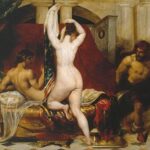
Our journey begins in the Kingdom of Lydia (currently, Western Turkey) in 735-718 BC, in the Royal Chambers of King Candaules of Greece. According to several historical texts, King Candaules would often be found in the company of his servant, Gyges, boasting about his new acquisition, his gorgeous wife, Nyssia.
Having to prove himself, the King arranged for Gygi to be hidden in the bedchambers so as to take a quick peep at the Queen as she undressed and got in bed with the King. As Gygi was leaving the Royal Chambers, the Queen spotted him.
The perception of owning a sex doll depends on the social scripts, be it the feminist or the patriarchal narrative, to which a gender adheres. With eons of control over a female’s sexuality, the feminist woman of today regains her power by embarking upon a journey that involves stocking up on dildos, vibrators, wands, suction toys, anal beads, butt plugs, so on and so forth.
Whereas, the purchase of a sex toy or a doll by the masculine product of centuries worth of ingrained patriarchy, is often ridiculed as less than a man as he was unable to procure a woman to cater to his pleasure.


Across cultures, across languages, from the minute we are born, we are fed the fairytale of Monogamy: the quest to sealing the knot with your soul mate and living happily ever after! At first light, we begin our search for our Prince Charming, catering to all the gender roles enforced by the Victorian society: Ah! The Damsel in Distress! On horseback, men too, ride away to the battlefield in the hopes of finding a suitable, demure damsel, so as to honor her with his surname. But we are so terrible at maintaining this facade: if monogamy is the ideal then why do many cheat?
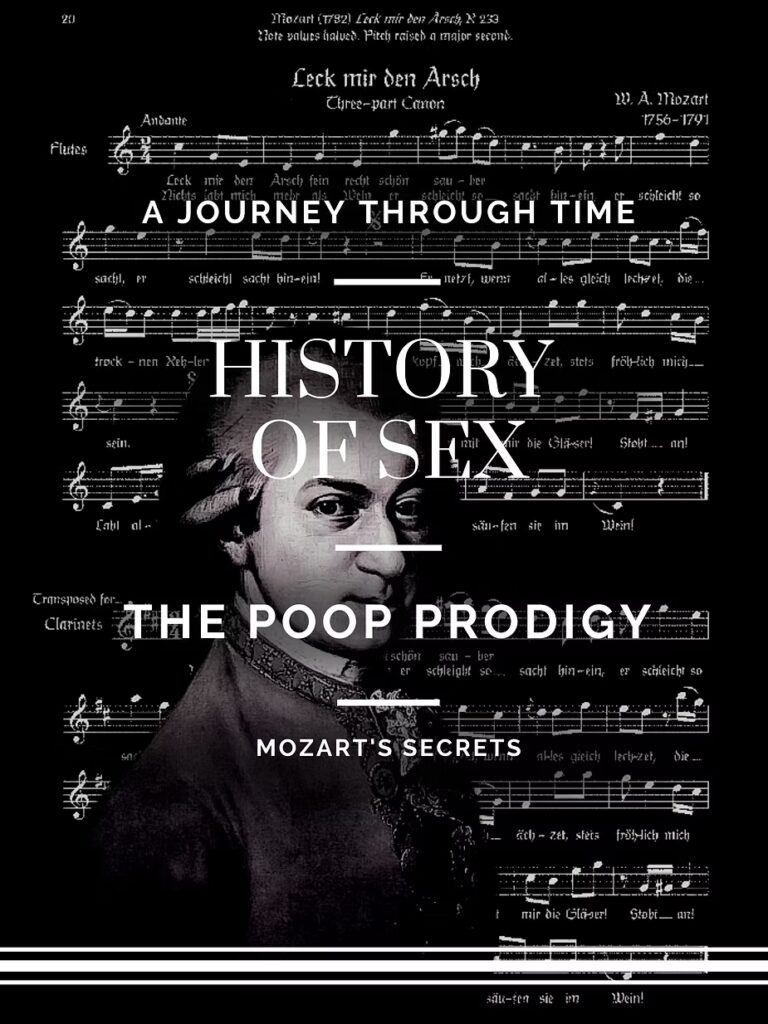
This is the Requiem, Mozart’s last composition. Legend has it that it even brought Mozart to tears when he was composing it. And here we have another Mozart composition: Leck mir den Arsch (Lick me in the Ass), composed in 1782, Vienna.
Several historians argue over whether or not this is actually a Mozart creation. But the evidences to support Mozart’s fascination with poop, are far too many to disregard this composition. There are 39 scatological references alone, in Mozart’s letters indicating his deep German love for Poop jokes (Simkin, 2015).

Transdisciplinary Researcher | Sex Educator | Neuroscience Consultant
The Critical Discourses arm of the Journal of Socio-Cultural Narratives (JSCN) is committed to a Minimal Carbon Footprint.